
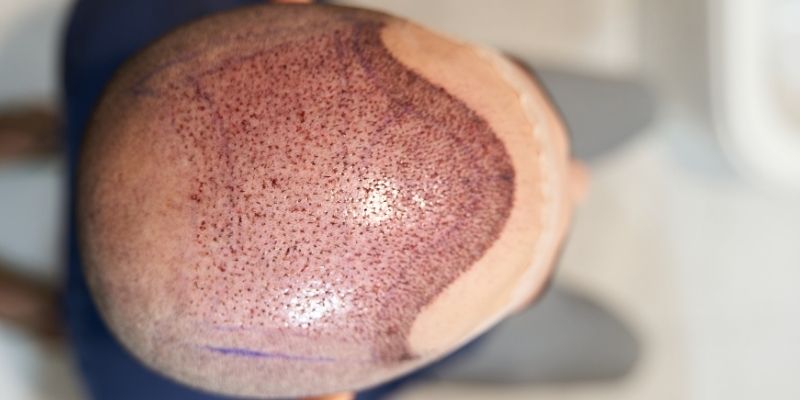
How is the Number of Grafts Determined in Hair Transplant?
How realistic are "maximum graft" promises in hair transplantation? We explain the factors determining the number of grafts, the importance of the donor area, and why proper planning is more critical than the highest number.

Hair transplant specialist Alp Eren Akinturk Tuna is a pioneer in hair restoration. Having completed his subspecialty in the USA, he is the developer of innovative methods such as stem cell-supported FUE and Bio-Harmonic hairline. The internationally award-winning Tuna shares his knowledge with his patients at NK Aesthetics, which he founded. (This biography was created for trial purposes.)
Maximum Number of Grafts in Hair Transplant: Proper Planning and the Importance of the Donor Area
One of the first and most common questions our patients direct to us in hair transplant consultations is undoubtedly: "How many grafts will be transplanted to me?" or "What is the maximum number of grafts you can transplant in a single session?". This is a highly natural curiosity because the number of grafts to be transplanted seems directly related to the density of the result to be achieved. However, regarding this issue, beyond the marketing promises in the sector, there are very important scientific and ethical facts to know.
The goal of a professional hair transplant clinic is not to reach the highest number in a single session, but to achieve the most natural, most aesthetic, and most sustainable result considering the patient's current and future situation. This is only possible with proper planning and careful use of the donor area like a treasure.
Firstly: What Exactly is a Graft?
To get to the root of the matter, let's clarify the concept of "graft". A graft does not mean a single hair strand. A graft, medically called a "follicular unit", is groups of 1, 2, 3, or sometimes 4 hair roots that naturally exist on our scalp. So, when you are told "3000 grafts were transplanted", this actually means an average of 6000 to 7500 hair strands were transplanted. Therefore, planning is based on the number and quality of these follicular units rather than the number of hair strands.
What Are the Factors Determining the Required Number of Grafts?
The number of grafts required to be transplanted specifically for you is not a simple mathematical equation, but a complex analysis result where many variables are evaluated together:
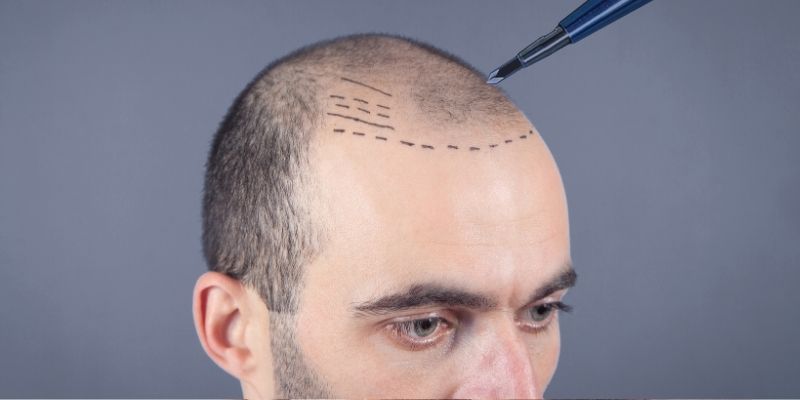
1. Degree of Hair Loss (Norwood Scale): The Norwood scale, used to classify male pattern hair loss, is the first step in determining the need. For example, the number of grafts needed by a patient at Norwood 2 or 3 level just to densify the hairline is completely different from the need of a patient at Norwood 5 or 6 level whose crown and frontal areas are completely open.
2. Capacity and Density of the Donor Area (The Most Critical Factor): Your donor area (your nape and the area above your ears) is your hair bank, and the resources in this bank are limited. The hair density in this area (number of grafts per square centimeter) determines the limit of how many grafts can be extracted in total. An experienced surgeon never disrupts integrity while extracting from this area. The general rule is not to extract more than 25-30% of the density in the donor area. Exceeding this limit leads to serious irreversible aesthetic problems called "over-harvesting".
3. Hair Strand Thickness and Character: Thick and wavy hair provides much better coverage than fine and straight hair. Therefore, fewer grafts may be needed to cover the same area in a patient with thick hair, while more grafts may be required to create the same feeling of density in a patient with fine hair.
4. Patient's Age and Future Planning: This is the most important indicator of an ethical approach. Especially in a young patient in their 20s, hair loss is still continuing. Transplanting "maximum grafts" to this patient in a single session means not leaving enough resources in the donor area for a second operation when shedding continues in the future. A responsible surgeon also plans the patient's future and leaves a reserve for possible second or third sessions by using the donor area sparingly.
The Danger of "Maximum Graft" Promises: Over-harvesting
Promises like "6000-7000 grafts in a single session" offered by some purely marketing-oriented centers should be approached with skepticism. Extracting such a high number of grafts from a patient whose donor area does not have this capacity leads to the following results:
-
Permanent thinning in the donor area: The nape area taking on a "moth-eaten" appearance with sparse spots.
-
Damage to the donor area: Disruption of the nourishment of the remaining hair follicles.
-
Loss of future chances: Lack of resources for a correction or densification operation that may be needed in the future.
In hair transplantation, what you should really focus on is not the number of grafts, but the strategic plan prepared specifically for you. A good hair transplant is the art of creating a result that will look natural even years later by using existing resources most efficiently and safely, not just filling in the gaps. For this reason, you should trust a physician who presents you with a plan before numbers and prioritizes the health of your donor area.


Most Read
Is Unshaven Hair Transplant Possible? All Details
Alp Eren Akinturk
How is Hair Transplant Done in Women? What are the Differences?
Alp Eren Akinturk
Things to Do Before a Hair Transplant
Alp Eren Akinturk
How to Choose the Right Shampoo for Your Hair Type?
Alp Eren Akinturk
What is FUE Hair Transplant? How is it Done?
Alp Eren Akinturk