
Is Unshaven Hair Transplant Possible? All Details
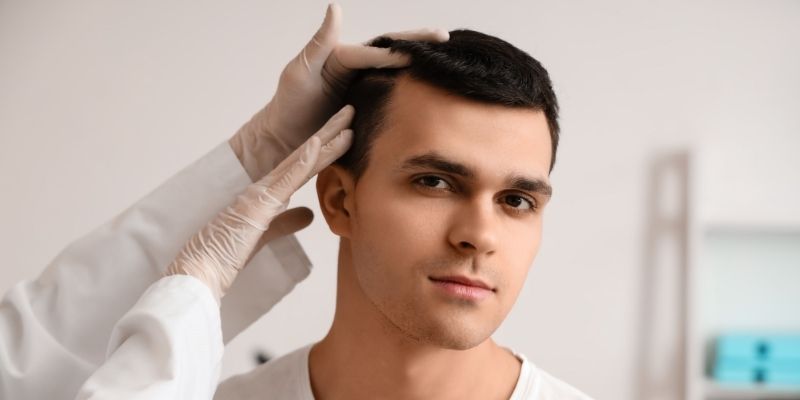
Do you want to have a hair transplant without getting your hair cut? We explain the advantages, disadvantages, suitability, and operational details of unshaven hair transplant in this guide.

Hair transplant specialist Alp Eren Akinturk Tuna is a pioneer in hair restoration. Having completed his subspecialty in the USA, he is the developer of innovative methods such as stem cell-supported FUE and Bio-Harmonic hairline. The internationally award-winning Tuna shares his knowledge with his patients at NK Aesthetics, which he founded. (This biography was created for trial purposes.)
Is Unshaven Hair Transplant Possible? Advantages, Disadvantages, and Application Conditions
In the process of deciding to have a hair transplant, one of the biggest concerns and hesitations of patients is the necessity of completely shaving the hair for the operation. Especially for individuals who have an active business life, are in the public eye, or want to maintain their hairstyle for personal reasons, this situation can cause them to postpone the operation or give up on it altogether. Modern hair transplant technologies offer an extremely aesthetic and practical solution to this important problem: Unshaven Hair Transplant.
So, is it really possible to have a hair transplant without having the hair cut at all? How is this method applied, and what differences does it contain compared to traditional methods? Here is the unshaven hair transplant guide with all its aspects.
What Does Unshaven Hair Transplant Mean?
The term "unshaven" is actually an umbrella term that covers different application forms rather than a single method. The two most common applications are as follows:
-
Regional Shaving (Concealing the Donor Area): This is the most preferred method. A small window (usually in the form of one or two strips) that can be hidden among the existing long hair is shaved in the patient's donor area, the nape region. Grafts are collected from this small area. The long hair remaining on top and on the sides easily covers and camouflages this shaved area after the operation. The area to be transplanted is completely untouched, and the hair remains at its original length.
-
Completely Unshaven Method: This is the method that requires the highest level of technical skill and experience. No shaving is done in either the donor area or the transplant area. The surgeon works with special tools among the long hair, collects the grafts one by one, and implants them among the long hair again.
How is Unshaven Hair Transplant Applied?
The key technology in the success of unshaven hair transplantation is the DHI (Direct Hair Implantation) method we detailed in our previous article. The Choi implanter pen used in this method is an ideal tool for unshaven transplantation. Because this pen does the channel opening and graft placement process simultaneously. In this way, the surgeon can directly place the new grafts into the skin at the right angle and direction by entering precisely among the existing long hair without damaging it. The absence of the necessity to open channels in advance as in the traditional FUE method makes the DHI technique indispensable for unshaven operations.
Advantages of Unshaven Hair Transplant
-
Privacy and Quick Return to Social Life: This is its biggest advantage. It is absolutely unnoticeable from the outside that you had an operation. You can return to your social or professional life the next day without anyone noticing.
-
Preserving Current Hairstyle: Providing great psychological comfort, especially for female patients and long-haired men, not having to sacrifice their hair.
-
Immediate Coverage of the Donor Area: Even in the regional shaving method, operation scars remain completely hidden under the existing hair.
Disadvantages and Limitations
There are some important reasons why this method is not suitable for everyone:
-
Limited Number of Grafts: Working among long hair slows down the speed of the operation. Therefore, the maximum number of grafts that can be transplanted in a single session is lower than in a shaved operation.
-
Longer Operation Time: The operation time extends because it requires high precision and meticulousness.
-
Difficulty of Post-Operative Care: Cleaning the transplant area from among long hairs and applying recommended lotions requires more care and attention than a shaved area.
-
Higher Cost: Due to the special expertise, technology, and longer operation time required, its cost is higher than standard FUE operations.
Who is Suitable for Unshaven Hair Transplant?
This method is an ideal option for patients with the following profiles:
-
Those who generally need a lower number of grafts (maximum 2500-3000 grafts).
-
Those whose hair loss does not cover a large area and who mainly aim for densification or hairline correction.
-
Those considering a transplant for thinning in the crown area.
-
Female patients.
-
Those who consider keeping the operation secret an absolute priority for social and professional reasons.
Unshaven hair transplant is a comfortable and aesthetic solution that offers excellent results for the right candidates. However, it may not be the most efficient method for patients experiencing widespread and severe hair loss who need a high number of grafts in a single session. Which technique is most suitable for you should be decided after a detailed hair analysis and consultation with your doctor.
Most Read
Is Unshaven Hair Transplant Possible? All Details
Alp Eren Akinturk
How is Hair Transplant Done in Women? What are the Differences?
Alp Eren Akinturk
Things to Do Before a Hair Transplant
Alp Eren Akinturk
How to Choose the Right Shampoo for Your Hair Type?
Alp Eren Akinturk
What is FUE Hair Transplant? How is it Done?
Alp Eren Akinturk