
How is Hair Transplant Done in Women? What are the Differences?
Female pattern hair loss is different from men, and the hair transplant approach should also be different. We explain the reasons for hair transplant in women, its differences from men, unshaven methods, and who are suitable candidates.

Hair transplant specialist Alp Eren Akinturk Tuna is a pioneer in hair restoration. Having completed his subspecialty in the USA, he is the developer of innovative methods such as stem cell-supported FUE and Bio-Harmonic hairline. The internationally award-winning Tuna shares his knowledge with his patients at NK Aesthetics, which he founded. (This biography was created for trial purposes.)
Hair Transplant in Women: Applied Methods and Differences From Men
Although hair loss is a challenging experience for any gender, its psychological effects can often be deeper for women due to societal aesthetic perceptions. Seen as a "men's solution" for many years, hair transplantation has nowadays become an increasingly common treatment offering permanent and natural solutions to many patients experiencing female pattern hair loss. However, hair transplantation in women shows significant differences from men both in terms of the causes of shedding and the technique of the operation.
In this article, we will discuss in detail the process of hair transplantation in women, its differences from male pattern shedding, and how the operation is planned with a personalized approach.
Understanding Female Pattern Hair Loss: Key Differences
The first and most important step in planning a hair transplant in women is to correctly diagnose the type and cause of shedding. The main differences from men are:
-
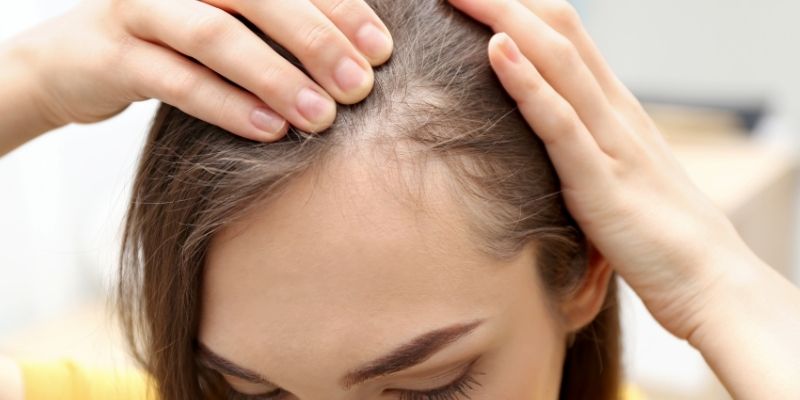
Shedding Patterns: Male pattern hair loss is generally characterized by a receding front hairline and thinning of the crown area (Norwood Scale). In female pattern hair loss (Ludwig Scale), the front hairline is mostly preserved. Shedding is seen as diffuse (widespread) thinning on the top and crown of the head. Hair is not completely lost, but their density decreases, they thin out, and the scalp becomes more visible.
-
Underlying Causes: In men, the main culprit of shedding is almost always genetics and DHT hormone. In women, besides genetic predisposition; many different medical conditions such as hormonal fluctuations (birth, menopause), thyroid diseases, polycystic ovary syndrome (PCOS), iron deficiency anemia can also trigger hair loss. Therefore, before recommending a hair transplant to a woman, a detailed blood test and medical history evaluation must be done to investigate whether there is an underlying treatable cause.
How is Hair Transplant Applied in Women?
These differences also directly affect the technique of the operation. Hair transplantation in women requires more precision and expertise compared to men.
-
Priority of Unshaven Methods: For female patients, the biggest priority is not cutting their existing hair. For this reason, unshaven hair transplant is a standard approach for women. A situation like completely shaving the hair is out of the question. In the nape area, which is the donor area where grafts will be taken, extraction is made by opening a small "window" that can be covered by long hair. The crown and top areas to be transplanted are not touched at all.
-
Indispensability of DHI Technique: The goal of hair transplantation in women is generally not to cover a completely bald area, but to do densification by going among existing hairs. At this point, the DHI (Direct Hair Implantation) technique and Choi implanter pen technology come into play. The Choi pen allows the new hair root to be planted directly at the right angle and direction by entering precisely among the existing long hairs without damaging them. This both protects existing hair and ensures the most natural density is achieved.
Who is a Good Candidate for Hair Transplant in Women?
Not every woman experiencing hair loss may be a suitable candidate for a hair transplant. Ideal candidates generally have the following characteristics:
-
Those whose shedding is female pattern hair loss linked to genetic factors.
-
Those whose donor area (nape region) is unaffected by shedding, healthy and dense. (If shedding is widespread in the donor area too, the operation will not be successful.)
-
Those experiencing traction alopecia (shedding caused by tying hair tightly).
-
Those who want to cover scars formed after a burn or accident.
-
Those who have a congenitally wide forehead and want to lower the front hairline.
Goal of the Operation: Natural Density and Volume
While the focus in men is generally to recreate the lost hairline, the main purpose in women is to restore the hair's former density and volume by eliminating the thinned appearance on the crown and top areas. This is a procedure that must be done with the meticulousness of an artist, to perfectly match the natural flow and angle of existing hair.
Hair transplantation in women is a treatment that offers extremely successful and life-changing results when applied with the right diagnosis and right technique. If you are also complaining about thinning in your hair, you can take the first step to find out if this modern and effective solution is suitable for you by consulting a physician specialized in this field.
Most Read
Is Unshaven Hair Transplant Possible? All Details
Alp Eren Akinturk
How is Hair Transplant Done in Women? What are the Differences?
Alp Eren Akinturk
Things to Do Before a Hair Transplant
Alp Eren Akinturk
How to Choose the Right Shampoo for Your Hair Type?
Alp Eren Akinturk
What is FUE Hair Transplant? How is it Done?
Alp Eren Akinturk