
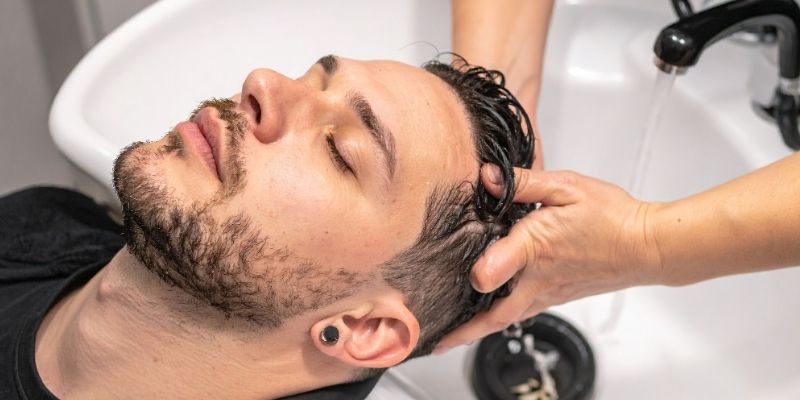
How to Choose the Right Shampoo for Your Hair Type?
Which substances in the labels should you avoid when choosing a shampoo? Which ingredients are beneficial for your hair? We prepared a guide to reading ingredient labels to find the most suitable product for your hair type.

Hair transplant specialist Alp Eren Akinturk Tuna is a pioneer in hair restoration. Having completed his subspecialty in the USA, he is the developer of innovative methods such as stem cell-supported FUE and Bio-Harmonic hairline. The internationally award-winning Tuna shares his knowledge with his patients at NK Aesthetics, which he founded. (This biography was created for trial purposes.)
How to Choose the Right Shampoo and Conditioner? Guide to Reading Ingredient Labels
The shampoo aisles of supermarkets are full of colorful packaging and dozens of ambitious promises like "repairing", "volumizing", "moisturizing". Among so many options, it can be quite challenging to find the right shampoo and conditioner for our hair type and needs. Although most of us make a choice based on the marketing promises on the front of the product or its smell, the real secret is hidden in the small print on the back of the bottle, namely the ingredient labels.
As a conscious consumer, learning to read these labels is one of the best investments you can make for your hair health. Here is a practical guide to guide you in this regard.
Basic Ingredients to Avoid
What is not in a shampoo's ingredients is sometimes more important than what is. Here are some common chemicals you should pay attention to:
-
Sulfates (SLS - Sodium Lauryl Sulfate / SLES - Sodium Laureth Sulfate): These are powerful detergents that cause shampoos to lather up a lot. However, this power can also strip away sebum, the scalp's natural protective oil. This condition can cause irritation, dryness, and itching, especially on dry and sensitive scalps. In oily hair, it can lead to the body overproducing oil (reactive seborrhea).
-
Parabens (Methylparaben, Propylparaben, etc.): These are preservatives used to extend the shelf life of products. Since debates over potential hormonal effects continue, opting for products labeled "paraben-free" is a good precautionary approach.
-
Silicones (Dimethicone, Cyclopentasiloxane, etc.): They give an instant feeling of smoothness and shine by coating the hair strand. While it sounds good, this coating can accumulate on the hair over time, preventing the hair from receiving moisture and making the hair heavy and lifeless. It can clog pores, especially when used close to the scalp.
Beneficial Ingredients to Look For
So, which substances are good to see in the ingredients of a shampoo or conditioner? This depends on your hair's needs:
-
For Dry and Damaged Hair (Moisturizers):
-
Panthenol (Provitamin B5): Penetrates the hair strand and locks in moisture.
-
Glycerin, Hyaluronic Acid: Powerful moisture magnets.
-
Natural Oils: Argan oil, Shea butter, Coconut oil.
-
-
For Fine and Weak Hair (Strengtheners):
-
Keratin (Hydrolyzed Keratin): The main building block of hair; strengthens by filling the gaps in the hair.
-
Amino acids, Peptides: They are the building blocks of protein and repair the hair.
-
-
For Hair Prone to Hair Loss (Stimulators):
-
Caffeine: Known to stimulate blood circulation in hair roots.
-
Biotin, Zinc: Essential vitamins and minerals for hair health.
-
Herbal Extracts: Saw Palmetto, Nettle, Ginseng.
-
-
For Sensitive Scalp (Soothers):
-
Aloe Vera, Chamomile, Allantoin: They have skin calming and soothing properties.
-
In conclusion; next time you go shampoo shopping, turn around and read the small print before being fooled by the shiny promises on the front of the bottle. Choosing products that contain fewer harmful chemicals and more nourishing ingredients will ensure your hair and scalp thank you in the long run.
Most Read
Is Unshaven Hair Transplant Possible? All Details
Alp Eren Akinturk
How is Hair Transplant Done in Women? What are the Differences?
Alp Eren Akinturk
Things to Do Before a Hair Transplant
Alp Eren Akinturk
How to Choose the Right Shampoo for Your Hair Type?
Alp Eren Akinturk
What is FUE Hair Transplant? How is it Done?
Alp Eren Akinturk