
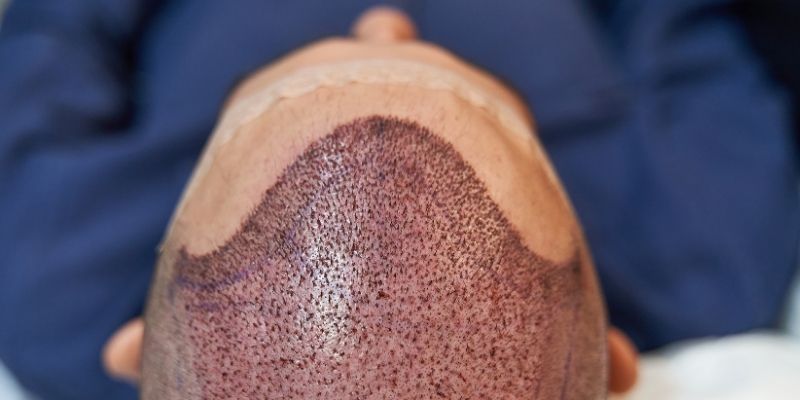
The First 1 Month Recovery Process After Hair Transplant
The first month after a hair transplant is the most critical period. We explain in detail week by week the processes such as edema, scabbing, and itching that await you from the first day to the end of the 1st month.

Hair transplant specialist Alp Eren Akinturk Tuna is a pioneer in hair restoration. Having completed his subspecialty in the USA, he is the developer of innovative methods such as stem cell-supported FUE and Bio-Harmonic hairline. The internationally award-winning Tuna shares his knowledge with his patients at NK Aesthetics, which he founded. (This biography was created for trial purposes.)
Recovery Process After Hair Transplant: Day by Day (First 1 Month) What to Consider?
Your hair transplant operation has been successfully completed. Now, the recovery process, which is the most important phase of your journey to regain your new hair, begins. Especially the first one-month period forms the basis for the health of the transplanted grafts and the ultimate success of the operation. Knowing what you will encounter during this process will both reduce your anxiety and ensure you take the right steps.
Here is your week-by-week recovery guide explaining what awaits you from the day of the operation to the end of the first month.
Immediately After the Operation (First 48 Hours): Maximum Protection and Rest
These first two days are the most sensitive period when the grafts try to attach to their new places.
-
What to Expect? Mild leaks, redness, and tenderness in the donor and transplant areas are normal. The painkillers given to you will control possible mild pain.
-
What to Do?
-
Make sure to rest.
-
Sleep on your back at a 45-degree angle with the special neck pillow provided to you. This minimizes the formation of edema (swelling).
-
Absolutely do not touch the transplant area, avoid contact (pillow, quilt, etc.).
-
Drink plenty of water.
-
Week 1 (Days 3-7): Edema, Scabbing, and Gentle Cleaning
This week is the period when visible signs of healing appear.
-
What to Expect? Within a few days after the operation, edema may be seen around the forehead and eyes. This is a completely temporary condition caused by gravity. Tiny scabs start to form around each graft in the transplant area.
-
What to Do?
-
After the first wash done at your clinic, start washing your hair gently every day with the procedure shown to you. These washes will soften the scabs.
-
Never peel or scratch the scabs.
-
Continue not to bend your head forward and avoid heavy work.
-
Week 2 (Days 8-14): Scabs Falling Off and Intense Itching
Now you are moving to the next stage of healing.
-
What to Expect? Thanks to regular washing, a large part of the scabs will have fallen off on their own from about the 10th day. You may see some hair strands falling out along with the scabs; this is normal. You will begin to feel intense itching in both the donor area and the transplant area. Remember: Itching is the best sign of healing!
-
What to Do?
-
No matter how intense the itching is, NEVER scratch the area with your nails. This can damage the grafts and lead to infection.
-
To relieve the itching, you can touch very gently with your fingertips or use a saline solution spray recommended by your clinic.
-
Weeks 3 and 4 (Days 15-30): Normalization and Shock Loss
Towards the end of the first month, you will have almost completely returned to your social life.
-
What to Expect? The redness in the transplant area has largely decreased. This period is when shock loss, which we explained in detail in our previous article, begins. Do not be alarmed to see a large part of the transplanted hair falling out; this is an expected process.
-
What to Do?
-
You can now take a shower more normally (but still gently) with your doctor's approval.
-
You can start light exercises that do not cause sweating (like walking).
-
Be patient. Remind yourself that shock loss is a preparation phase for your new and permanent hair to grow.
-
Listening to your body throughout this first month, strictly following your clinic's instructions, and being patient is the key to a successful result.
Most Read
Is Unshaven Hair Transplant Possible? All Details
Alp Eren Akinturk
How is Hair Transplant Done in Women? What are the Differences?
Alp Eren Akinturk
Things to Do Before a Hair Transplant
Alp Eren Akinturk
How to Choose the Right Shampoo for Your Hair Type?
Alp Eren Akinturk
What is FUE Hair Transplant? How is it Done?
Alp Eren Akinturk