
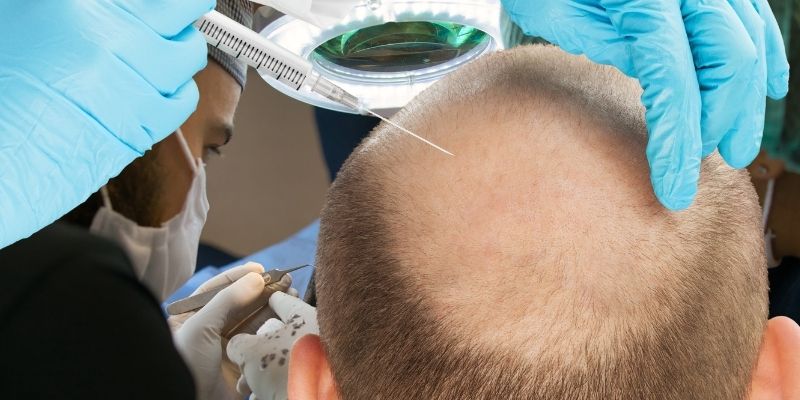
Is Shock Loss Normal After Hair Transplant?
Sudden hair loss after a hair transplant, known as shock loss, can worry patients. We explain scientifically why this process occurs, when it starts and ends, and why it is not a permanent loss.

Hair transplant specialist Alp Eren Akinturk Tuna is a pioneer in hair restoration. Having completed his subspecialty in the USA, he is the developer of innovative methods such as stem cell-supported FUE and Bio-Harmonic hairline. The internationally award-winning Tuna shares his knowledge with his patients at NK Aesthetics, which he founded. (This biography was created for trial purposes.)
What is Shock Loss? When Does It Start and Is This Process Normal?
You have successfully survived the first weeks after your hair transplant operation, the scabs have fallen off, and tiny hairs have appeared in your transplant area. While everything is going well, you woke up one morning and noticed hair falling out on your pillow or in the shower. This situation can naturally create great anxiety and panic: "Did the operation fail? Am I losing my grafts?"
First of all, take a deep breath and relax. Experiencing this situation does not mean the operation failed. On the contrary, this is a completely normal, expected, and temporary part of the recovery process. Let's take a closer look at this process, medically called "Shock Loss".
What Exactly is Shock Loss and Why Does It Happen?
Hair transplantation is a surgical procedure in which hair follicles are extracted from one area of the body (donor area) and transplanted to another area. This transfer process, no matter how delicately done, is a kind of trauma for hair follicles. In response to this "shock," hair follicles enter a temporary resting phase, namely the telogen phase, to protect themselves.
When they enter this sleep mode, they push the existing hair strand inside them and this strand falls out. The most critical point to be understood here is this: What falls out is only the visible part of the hair; that is, the hair strand. The hair follicle itself, which is valuable to you and will produce new hair, continues to live safely under the skin and adapt to its new place.
When Does Shock Loss Start and How Long Does It Last?
Shock loss can generally start anytime between the 2nd week and 8th week after hair transplant. Its intensity and starting time may vary in every patient. While hair loss can be very intense in some patients, it may be less noticeable in others. This shedding phase is usually completed within a few weeks.
When Will New Hair Start to Grow?
After the shock loss is completed, your hair follicles that have passed into the sleep phase slowly wake up and start producing new hair strands. The emergence of new hair is usually observed from the 3rd or 4th month after the operation. These hairs, which initially grow thin, weak, and like fuzz, thicken, strengthen, and grow to regain their natural form over time. It can take 12 to 18 months for the results to become fully apparent.
Will Existing Hair Also Fall Out?
Although rare, the existing, original hair around the transplanted area can also experience shock loss by being affected by the local stress created by the operation. This situation is also completely temporary, and these hairs will eventually grow back together with the newly transplanted hair over time.
In conclusion; shock loss is not a loss, but a preparation stage for the growth of your new and permanent hair. This process is a sign that hair follicles have settled in their new places and gained strength. Therefore, when you see your falling hair, instead of worrying, remind yourself that the process is working normally and you need to be patient. Everything is fine.

Most Read
Is Unshaven Hair Transplant Possible? All Details
Alp Eren Akinturk
How is Hair Transplant Done in Women? What are the Differences?
Alp Eren Akinturk
Things to Do Before a Hair Transplant
Alp Eren Akinturk
How to Choose the Right Shampoo for Your Hair Type?
Alp Eren Akinturk
What is FUE Hair Transplant? How is it Done?
Alp Eren Akinturk